


TL;DR:
- Music games for preschoolers enhance cognitive, motor, and social skills through rhythm and movement. Caregiver participation and variety in musical styles boost executive function and social cooperation more effectively. Short, daily sessions of these research-backed activities promote lasting developmental benefits.
Music games for preschoolers are interactive activities that combine rhythm, movement, and play to build cognitive, motor, and social skills in children aged 2–5. Research confirms that music-based interventions provide holistic benefits by simultaneously strengthening cognitive, motor, social, and emotional development. For Florida families looking for ways to enrich their child’s early years, these games offer a research-backed, joyful path forward. Allisongs for Tots has seen this firsthand across more than 15 years of working with Tampa preschoolers and their caregivers.
1. What makes music games for preschoolers so effective?
Music games work because they align with how young children naturally learn. Children are wired for play, and music acts as a didactic stimulus that makes rhythm recognition and learning persistence feel effortless. When a child claps along to a beat or freezes when the music stops, they are practicing timing, attention, and self-regulation without realizing it. That combination of engagement and skill-building is what separates music games from passive listening.
The developmental payoff is real and measurable. An 8-week music training program improved rhythmic skills and executive function more in 4-year-olds than in 2-year-olds, showing that the preschool window is especially productive. Executive function includes skills like working memory, focus, and impulse control. These are the same skills children need to succeed in kindergarten and beyond.
2. Freeze Dance
Freeze Dance is one of the most effective movement games for preschoolers. Children dance freely while music plays, then freeze completely when it stops. This game directly targets inhibitory control, which is the ability to stop an action on cue. Structured music activities improve inhibitory control, working memory, and cognitive flexibility in kindergarten children.
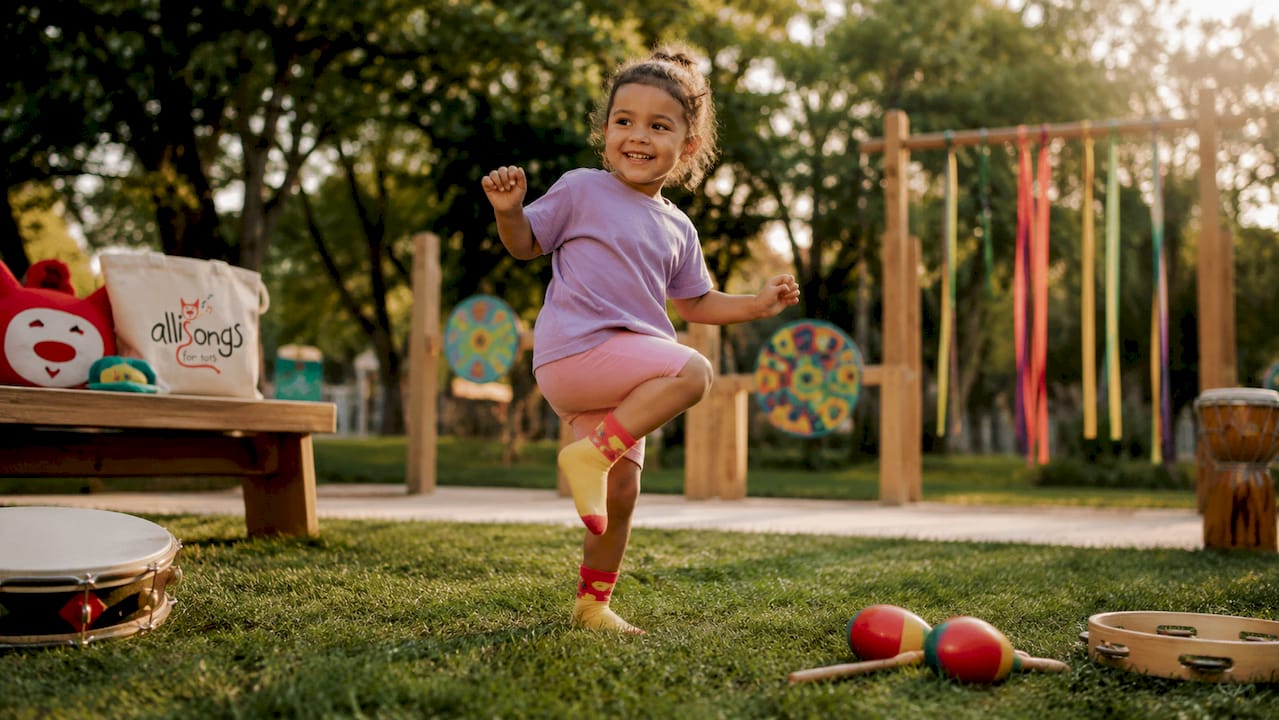
The game also builds body awareness and spatial intelligence. Children learn to move without bumping into others, read the room, and respond quickly to auditory cues. You can increase the challenge by asking children to freeze in a specific pose, like a tree or a rocket ship.
Pro Tip: Vary the tempo of the music between rounds. Slow songs encourage controlled movement, while fast songs build energy and reaction speed.
3. Rhythm clapping games
Rhythm clapping games are preschool music lessons in their simplest form. A caregiver claps a pattern, and the child mirrors it back. This call-and-response format builds listening skills, short-term memory, and rhythmic timing. Music interventions in early childhood simultaneously improve memory, motor coordination, and social-emotional regulation.
Clapping games also require joint attention, meaning the child must focus on you and respond intentionally. That back-and-forth is a foundation for conversation and cooperative play. Start with two-beat patterns and gradually increase complexity as your child’s confidence grows.
4. Musical Statues
Musical Statues follows the same stop-and-go structure as Freeze Dance but adds a competitive layer that older preschoolers enjoy. When the music stops, any child who moves is “out.” This game sharpens listening skills and teaches children to manage the mild frustration of being eliminated. Both outcomes support emotional regulation.
The game is easy to run in small Florida playgroups or backyard gatherings. You need only a phone, a speaker, and open space. For younger children, remove the elimination rule and simply celebrate whoever holds the stillest pose.
5. Circle games and group rhythm play
Circle games for preschoolers are the clearest path to building social skills through music. Games like “Pass the Beat” (where children pass a clap around the circle) or “Who Has the Drum?” teach children to wait their turn, pay attention to peers, and contribute to a shared goal. Group music game interventions significantly improved cooperative behavior in 5- to 6-year-olds, with effects that remained stable after follow-up.
The research used a two-phase approach: rhythm games first, then instrumental ensemble play. Each phase added a layer of social complexity. Parents can replicate this at home by starting with simple clapping circles and later introducing small percussion instruments like shakers or tambourines.
Key social skills these games build:
- Turn-taking: Waiting for your moment in the circle
- Joint attention: Watching and listening to peers
- Cooperation: Contributing to a group rhythm without overpowering it
- Emotional regulation: Staying calm when you miss a beat
Pro Tip: Sit at your child’s level during circle games. Your physical presence signals that this is a shared activity, not a performance, and children relax and engage more freely.
6. Instrument ensemble play
Giving each child a simple instrument and playing together as a group is one of the most powerful musical activities for kids. Shakers, hand drums, and rhythm sticks are ideal for preschoolers. Each child contributes a part, and the group creates something none of them could make alone. That experience builds confidence and a sense of belonging.
Ensemble play also teaches children to listen while they play, which is a cognitively demanding skill. They must monitor their own sound and adjust it relative to the group. This is exactly the kind of cooperative music play that research links to lasting gains in cooperative behavior.
7. Locomotor skill games with synchronized music
Locomotor skill games ask children to hop, gallop, skip, or march while music plays. The key is using music that matches the movement rhythm. Synchronous music aligned to movement motivates children more and improves accuracy and coordination better than music that does not match the activity’s pace. This means choosing a steady marching beat for marching and a bouncy rhythm for hopping.
These games develop gross motor skills in a way that free play alone does not. Music-synced locomotor games improve motor skills more effectively than unstructured free play. For Florida parents, these activities work beautifully outdoors in the cooler morning hours, in a backyard or at a local park.
8. Singing games for toddlers and preschoolers
Singing games for toddlers like “Ring Around the Rosie,” “London Bridge,” and “The Wheels on the Bus” are classics for good reason. They combine melody, movement, and predictable structure, which helps young children feel safe and engaged. Predictability is not boring for preschoolers. It is reassuring, and it frees up mental energy for learning the musical content.
These games also build vocabulary and phonological awareness, which are pre-reading skills. When children sing rhyming words repeatedly, they internalize sound patterns that later help them decode written language. Allisongs for Tots incorporates original songs alongside culturally diverse music to give children a richer range of sounds and rhythms than any single tradition offers.
9. How music style affects cognitive development
Not all music produces the same results in preschool games. A study of 115 children across six music-style groups found that Latin music showed the strongest consistent benefits for inhibitory control and working memory. Nursery rhymes and jazz also produced gains, but Latin rhythms outperformed them on key executive function measures.
| Music style | Primary cognitive benefit | Best game pairing |
|---|---|---|
| Latin (salsa, cumbia) | Inhibitory control, working memory | Freeze Dance, Musical Statues |
| Nursery rhymes | Phonological awareness, attention | Singing games, circle games |
| Jazz | Cognitive flexibility, listening | Rhythm clapping, ensemble play |
| Classical | Sustained attention, sequencing | Locomotor skill games |
This matters for how you choose music during play. Rotating styles across the week gives children exposure to different rhythmic structures and keeps games feeling fresh. Allisongs for Tots uses this exact approach, weaving Latin, folk, and original music into each session.
10. Incorporating music games into daily routines
Daily routine integration is the most practical way to make preschool music games stick. You do not need a dedicated music time. Games fit naturally into transitions, meals, and outdoor play.
Easy ways to embed music games into your day:
- Morning routine: Clap a wake-up rhythm and ask your child to echo it back
- Cleanup time: Play a cleanup song and challenge your child to finish before it ends
- Car rides: Sing call-and-response songs or tap rhythms on the steering wheel
- Outdoor play: Use a portable speaker for locomotor games in the yard or at a park
- Bedtime wind-down: Slow, gentle singing games signal the transition to rest
You can also incorporate music into daily routines without any instruments at all. Body percussion, humming, and vocal play count. The goal is consistency, not perfection.
Pro Tip: Balance structured games with free musical play. Let your child bang on pots, make up silly songs, and move however they want. Free play builds creativity; structured games build specific skills. Both matter.
Key takeaways
Music games for preschoolers build executive function, motor skills, and social-emotional development simultaneously, making them one of the most efficient tools in early childhood learning.
| Point | Details |
|---|---|
| Rhythm games build executive function | Structured music activities improve inhibitory control, working memory, and cognitive flexibility. |
| Latin music shows the strongest cognitive gains | Research found Latin rhythms produced the most consistent benefits for preschoolers’ executive function. |
| Cooperative group play builds social skills | Group music games improve cooperative behavior, with effects that last beyond the intervention period. |
| Synchronized music improves motor skills | Music matched to movement rhythm produces better coordination outcomes than unstructured free play. |
| Daily integration amplifies results | Short, consistent music game sessions throughout the day outperform occasional longer sessions. |
What 15 years of music classes taught me about these games
After working with Tampa families for over 15 years, I have one observation that surprises most parents: the children who benefit most from music games are not the ones with the most musical talent. They are the ones whose caregivers participate alongside them. When a parent claps, sings, or freezes in a silly pose, the child’s engagement doubles. That is not anecdotal. It reflects what early music education research consistently shows about adult involvement in early learning.
The second thing I have learned is that parents often underestimate how quickly preschoolers plateau on simple games. A child who mastered Freeze Dance at age 3 needs a harder version by age 4. Add a rule, change the music style, or introduce an instrument. The research on music style and executive function confirms that variety in musical input produces broader cognitive gains than repetition of the same style.
My honest advice: do not wait until your child is “ready” for music. The preschool years, especially ages 3–5, are the window when rhythmic training produces the sharpest gains in executive function. Start simple, stay consistent, and let the games grow with your child.
— Allisongs for Tots
Music classes in Tampa that bring these games to life
Allisongs for Tots offers structured music classes for preschoolers in Tampa, designed for children from birth to age five. Every session weaves rhythm games, movement activities, and ensemble play into a research-based curriculum that mirrors the developmental benefits described in this article.
Caregivers participate in every class, which means you are not just dropping your child off. You are learning how to bring these games home. The curriculum draws on culturally diverse music, including Latin rhythms shown to strengthen executive function, alongside original songs by director Allison Wilkins. Families across the Tampa Bay area have found that consistent attendance builds skills that show up clearly by the time children enter kindergarten. Visit allisongsfortots.com or call 941-350-5438 to learn about current class schedules and enrollment.
FAQ
What are the best music games for preschoolers?
Freeze Dance, rhythm clapping games, circle games, and locomotor skill games with synchronized music are among the most effective. Each targets a different developmental area, including motor skills, executive function, and social cooperation.
How does music improve executive function in preschoolers?
Structured music activities improve inhibitory control, working memory, and cognitive flexibility. Research shows that 8 weeks of music training produced measurable executive function gains in preschoolers compared to children without music exposure.
Which music style is best for preschool learning games?
Latin music produced the strongest consistent benefits for inhibitory control and working memory in a study of 115 preschoolers. Rotating Latin rhythms, nursery rhymes, and jazz across the week gives children the broadest cognitive benefits.
How long should a music game session be for preschoolers?
Short, consistent sessions work better than long, infrequent ones. Most preschoolers engage well for 10–20 minutes at a time. Daily sessions, even brief ones, produce more lasting skill gains than weekly longer sessions.
Can music games help with my child’s social skills?
Yes. Group music games directly build turn-taking, joint attention, and cooperative behavior. A structured group music game intervention produced significant and lasting improvements in cooperative behavior in children aged 5–6.
