


TL;DR:
- Multicultural preschool songs use authentic rhythms and stories to promote cultural awareness and cognitive growth. Engaging children with diverse, developmentally appropriate music involves movement, family sharing, and intentional routine integration. Over years of experience, experts find that even without understanding lyrics, children naturally connect with rhythms, fostering empathy and belonging.
Multicultural preschool songs are musical pieces that introduce toddlers to diverse cultures through authentic rhythms, languages, and stories, building cognitive, emotional, and social development alongside cultural awareness. Research shows that children who engaged in an 8-week culturally resonant song program showed significant vocabulary growth and reduced anxiety. For Florida families raising children in one of the most culturally rich states in the country, these songs do more than entertain. They teach toddlers that the world is wide, welcoming, and full of beautiful sound. Allisongs for Tots has seen this firsthand across 15 years of music classes in Tampa.
What makes a great multicultural preschool song?
The best diversity songs for preschool combine authentic cultural elements with age-appropriate rhythms and themes. Not every world music track belongs in a toddler playlist. The right songs meet children where they are developmentally while opening their ears to something genuinely new.
Strong multicultural songs share these qualities:
- Authentic cultural roots. Experts recommend avoiding oversimplified versions that strip away real cultural textures. A watered-down “African drum” track with no real grounding does more harm than good.
- Global variety. Songs from at least 4 global regions including African, Latin American, Asian, and Indigenous traditions promote cognitive flexibility in children ages 3–5.
- Age-appropriate rhythm and melody. Percussion-heavy, rhythmically clear tunes work best for preschoolers. Complex time signatures and abstract lyrics lose young listeners quickly.
- Multisensory engagement. The best songs invite movement, clapping, scarves, or simple instruments. Physical participation deepens memory and joy.
- Opportunities for family sharing. When a song connects to a family’s own heritage, it validates a child’s identity in a powerful way.
Pro Tip: Seek out field recordings or playlists curated by cultural educators rather than generic “world music for kids” compilations. The difference in authenticity is immediately audible, and toddlers respond to real musical texture.
Connecting global music to early language development is one more reason to prioritize authentic sources. Even before toddlers understand lyrics, their brains absorb phonemic patterns that support future language learning.
Top 10 multicultural preschool songs to try with your toddler
These ten songs represent a range of global traditions. Each one brings something distinct to your child’s auditory world.
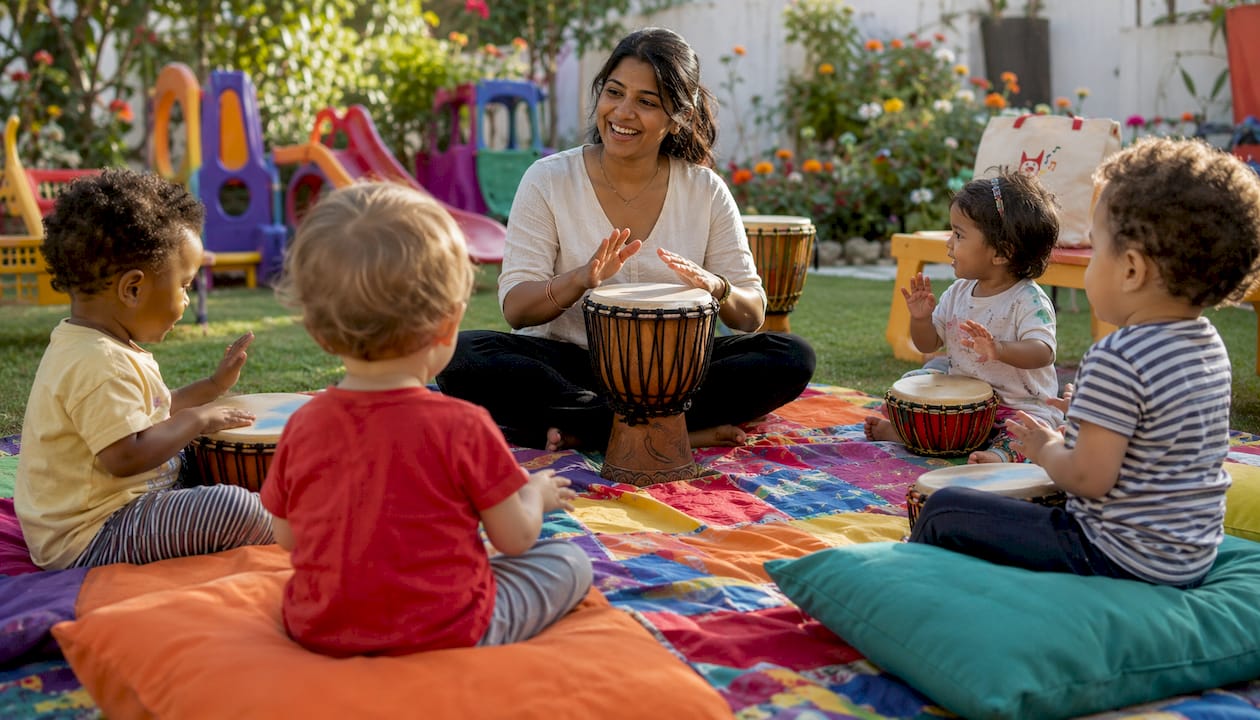
1. African drumming and call-and-response songs
African call-and-response songs like “Obwisana” from Ghana teach turn-taking and listening. The repetitive structure makes them easy for toddlers to join. Pair with hand drums or clapping to build gross motor skills and a sense of rhythm.
2. “La Bamba” (Mexican folk song)
This classic Mexican folk song uses a simple, driving rhythm that toddlers find irresistible. It introduces Spanish phonemes naturally. Try a slow, clapping version and let children shake maracas while you sing together.
3. Hawaiian Hula songs
Traditional Hula songs like “Aloha ‘Oe” combine gentle melody with storytelling through hand gestures. The hand movements build fine motor skills and teach children that music can tell a story without words. This works beautifully as a calming transition activity.
4. Indian Bollywood-inspired children’s songs
Upbeat Bollywood children’s songs introduce pentatonic scales and syncopated rhythms unfamiliar to Western ears. Songs like “Chanda Mama” (Moon Uncle) use repetition and imagery that toddlers love. Add scarves or ribbons for a full sensory experience.
5. Chinese Ribbon Dance songs
Traditional Chinese ribbon dance music features flowing melodies and clear rhythmic pulses. “Mo Li Hua” (Jasmine Flower) is one of the most recognized Chinese folk songs and works well for slow, graceful movement. Ribbon sticks make this a favorite in group settings.
6. Irish Step Dance songs
Irish jigs and reels have a bouncy, energetic quality that gets toddlers moving immediately. “The Irish Washerwoman” is a well-known reel with a clear, predictable structure. Stomp feet and clap hands to the beat for a full-body experience.
7. Australian Aboriginal movement songs
Aboriginal songs often connect to land, animals, and nature. Songs that mimic animal movements, like a kangaroo hop or emu walk, blend cultural storytelling with gross motor play. These songs also open conversations about caring for the natural world.
8. Greek Syrtos dance songs
The Syrtos is one of Greece’s oldest circle dances, and its steady, moderate tempo suits preschoolers well. Holding hands in a circle while stepping to the beat builds social connection and coordination at the same time. “Kalamatianos” is a widely recognized example.
9. Japanese Bon Odori songs
Bon Odori festival songs like “Tanko Bushi” (Coal Mining Song) use simple, repeated movements that toddlers can imitate. The steady drumbeat grounds the melody and makes participation easy. This song also opens a gentle conversation about Japanese seasonal celebrations.
10. Brazilian Samba songs for children
Brazilian Samba rhythms are among the most joyful and physically engaging in world music. Children’s Samba songs use call-and-response patterns and percussion that invite full-body movement. Movement expression in music builds gross motor skills and personal creativity, and Samba delivers both in abundance.
How to integrate cultural songs into your toddler’s daily routine
Bringing preschool global music into daily life works best when it is intentional, not incidental. Excessive background music overwhelms children. Music used as constant noise loses its power to engage and teach.
Here are practical ways to make cultural music a meaningful part of your day:
- Create a dedicated music time. Set aside 10–15 minutes each day for focused listening and movement. This signals to your child that music is an activity worth full attention.
- Pair songs with movement. Dance, stomp, wave scarves, or act out the song’s story. Physical music expression teaches motor coordination and creativity far more effectively than passive listening.
- Invite family participation. Ask grandparents or relatives to share songs from their own backgrounds. Family sharing of cultural songs validates children’s identity and transforms music into a community experience.
- Provide cultural context, simply. Show your child a picture of the country on a map. Name the language. Keep it brief and curious, not academic.
- Respect the source. Teach children that these songs belong to real communities. Frame listening as an act of appreciation, not performance.
Pro Tip: Create a weekly “world music ritual.” Pull out a simple map, point to the country, play the song, and share a related snack if you can. This multisensory ritual builds memory and genuine curiosity about other cultures.
Music also supports emotional regulation at home. Allisongs for Tots recommends pairing calming world music with transitions like cleanup or bedtime. You can find more guidance on music for toddler transitions to build these routines with confidence.
Addressing common questions about world music for toddlers
Parents often have genuine questions before introducing songs from different cultures. These concerns are worth addressing directly.
- Do toddlers need to understand the lyrics? No. Exposure to varied phonemic sounds supports language development even without lyric comprehension. Auditory richness is the goal, not translation.
- Are all world music genres appropriate for preschoolers? Not all. Rhythmically clear, percussion-driven songs work best. Avoid tracks with complex time signatures, very fast tempos, or adult lyrical themes.
- How do you avoid cultural stereotyping? Choose authentic field recordings or educator-curated playlists. Avoid novelty versions that reduce a culture to a single cliché sound.
- How do you balance familiar and new music? Rotate one new cultural song per week alongside familiar favorites. Familiarity builds comfort; novelty builds curiosity. Both matter.
- Can music build a sense of belonging? Yes. Integrating indigenous and culturally resonant songs improves cultural identity outcomes in preschoolers. Music is one of the most direct ways to tell a child: your background belongs here.
Introducing children to foreign languages early through song is one of the most natural and effective methods available to caregivers. The musical context removes pressure and replaces it with play.
Key Takeaways
Multicultural preschool songs build cognitive flexibility, emotional security, and cultural belonging most effectively when they are authentic, age-appropriate, and paired with movement and family involvement.
| Point | Details |
|---|---|
| Authenticity matters most | Choose field recordings or educator-curated songs, not novelty versions that oversimplify cultures. |
| Cover at least 4 global regions | Exposure to African, Latin American, Asian, and Indigenous music builds neural flexibility in ages 3–5. |
| Make music intentional | Dedicated music time outperforms background music for engagement and learning outcomes. |
| Movement deepens learning | Pairing songs with dance, clapping, or scarves builds motor skills and strengthens memory. |
| Family involvement validates identity | When relatives share their own cultural songs, children feel seen and culturally grounded. |
What 15 years of multicultural music has taught us
After more than 15 years of leading music classes for infants and preschoolers in Tampa, the pattern is clear. Children do not need to understand a song to love it. A two-year-old hearing a Brazilian Samba for the first time will start moving before the first verse ends. That instinct is not random. It is the brain responding to rhythm, pattern, and human connection.
What surprises many caregivers is how quickly children begin to associate songs with places, people, and feelings. A Japanese Bon Odori song becomes “the drum song.” A Greek circle dance becomes “the holding-hands song.” These associations are the beginning of empathy. They are how a child learns that other people have beautiful things worth knowing.
The goal of multicultural music is not cultural tourism. It is belonging. When a child hears their family’s language or rhythm reflected in a classroom or at home, something shifts. They stand a little taller. They participate a little more freely. That is the real outcome we are working toward, and it starts with one song.
— Allisongs for Tots
Music classes that bring the world to your toddler
Allisongs for Tots offers music classes for infants and preschoolers in Tampa that weave culturally diverse songs into every session. Director Allison Wilkins draws on over 15 years of experience to create a warm, research-based environment where caregivers participate alongside their children. Each class combines original songs with world music traditions, giving toddlers consistent exposure to global rhythms in a nurturing group setting. If you want your child to grow up curious, confident, and connected to the wider world, music is where that starts. Reach out to Allisongs for Tots to learn about enrollment and upcoming class schedules.
FAQ
What are multicultural preschool songs?
Multicultural preschool songs are age-appropriate musical pieces drawn from diverse global cultures, using authentic rhythms, languages, and stories to support toddlers’ cognitive, emotional, and social development.
Do toddlers need to understand the lyrics to benefit?
No. Exposure to varied phonemic sounds and rhythms supports language development even without lyric comprehension, making auditory richness the primary goal.
How many cultural regions should preschool music cover?
Experts recommend songs from at least 4 global regions, including African, Latin American, Asian, and Indigenous traditions, to promote cognitive flexibility in children ages 3–5.
How do I avoid cultural stereotyping when choosing songs?
Choose authentic field recordings or playlists curated by cultural educators rather than novelty versions that reduce a culture to a single oversimplified sound.
How does family involvement improve multicultural music experiences?
When families share their own cultural songs with children, it validates the child’s identity and deepens cultural belonging, turning music into a shared community experience.