


TL;DR:
- Effective holiday music for toddlers features predictable structure, moderate tempos, and encourages physical participation to foster development and joy. Active caregiver involvement during short, structured sessions enhances gains in language, memory, and social skills. Starting 2-3 weeks before the holiday builds familiarity, engagement, and developmental benefits.
Holiday music for toddlers is most effective when it features predictable structures, moderate tempos, and invites physical participation to stimulate early development and festive joy. The right festive songs do far more than fill a room with seasonal cheer. A 2026 study of 54 toddlers found that structured music programs produce measurable gains in rhythm, language, and inhibitory control. At Allisongs for Tots, we see this play out every session: when parents sing and move alongside their children, the developmental impact multiplies. Choosing the right children’s festive music this season is one of the most nurturing gifts you can give your toddler.
What makes holiday music for toddlers truly effective?
The best holiday songs for toddlers share three core qualities: moderate tempos of 90–120 BPM, simple melodic lines, and clear repetitive lyrics. These features prevent overstimulation and give toddlers the predictability they need to participate confidently. Songs that fall outside this range, whether too fast or too slow, tend to lose a toddler’s attention within seconds.
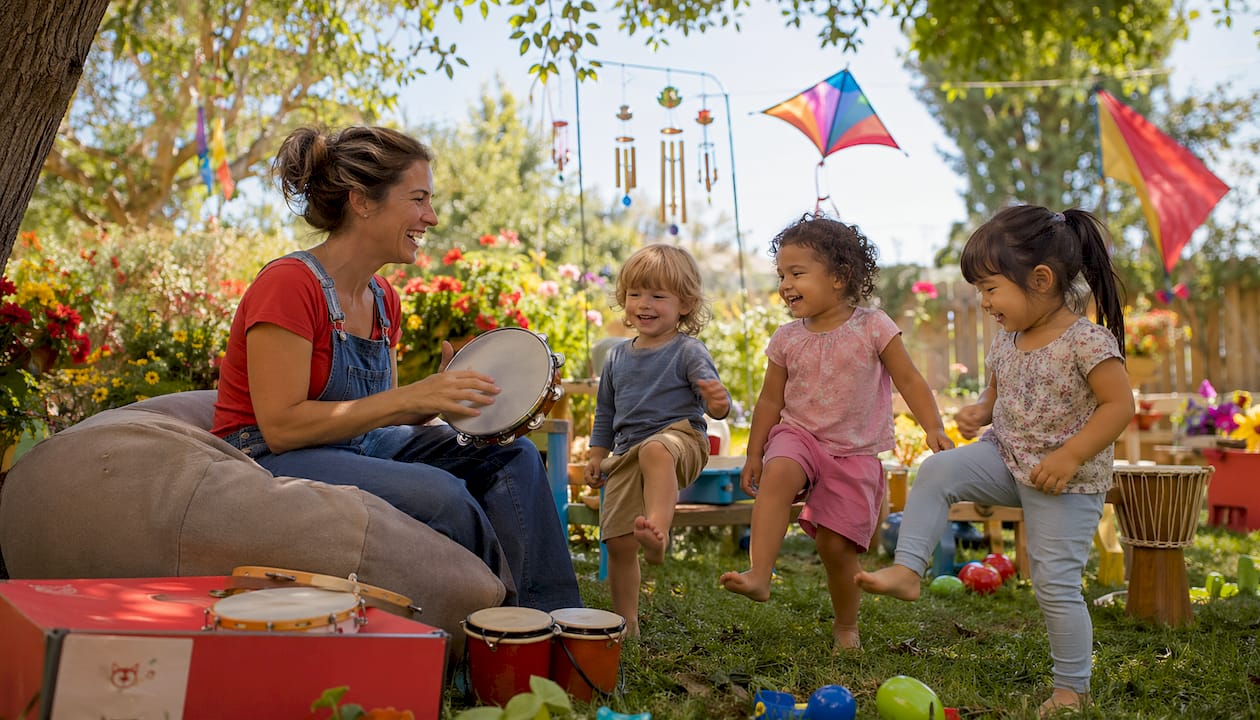
Beyond tempo, the structure of the lyrics matters. Short phrases that repeat, rhyme, or invite a response give toddlers a clear entry point. They can clap, echo a word, or fill in a blank. That active participation turns passive listening into a multisensory brain-building exercise. Complex harmonies or jarring sound effects work against this goal.
Culturally and seasonally relevant themes add another layer of engagement. Songs that reference snow, gifts, or family gatherings connect to the world toddlers see around them, especially here in Florida where the holiday season brings its own warm, festive energy. Familiar imagery in lyrics helps toddlers build vocabulary and context simultaneously.
- Tempo: Stay in the 90–120 BPM range to keep energy steady without overwhelming.
- Lyrics: Short, repetitive phrases with rhyme or call-and-response patterns.
- Movement cues: Songs that prompt clapping, jumping, or swaying.
- Sound design: Clear instrumentation without jarring effects or dense harmonies.
- Themes: Seasonal imagery that connects to a toddler’s real experience.
Pro Tip: Before adding a new song to your toddler holiday playlist, sing it once through yourself. If you can predict the next line after one listen, your toddler probably can too. That predictability is exactly what makes a song developmentally useful.
Top 10 holiday songs for toddlers that build skills and spark joy
A balanced holiday playlist mixes sing-along classics, narrative songs, call-and-response tracks, and cumulative memory challenges. Each type builds a different skill.
“Jingle Bells” is the gold standard for toddler sing-alongs. Its short phrases, strong beat, and familiar chorus make it easy for even the youngest children to join in. Use it as your session opener to signal that music time has begun.
“Rudolph the Red-Nosed Reindeer” introduces narrative structure. Toddlers follow a character through a problem and resolution, which builds early comprehension and empathy. Pause before the last word of each line and let your child fill it in.
“Must Be Santa” is a call-and-response song that demands active participation. One person asks, the group answers. This format builds listening skills, turn-taking, and working memory in a genuinely playful way.
“We Wish You a Merry Christmas” works well for movement. The steady triple meter naturally encourages swaying. Add a simple hand gesture for “we wish you” and toddlers will anticipate it every time.
“Frosty the Snowman” tells a clear, short story with a beginning, middle, and end. Narrative exposure at this age supports language development and sequencing skills that transfer directly to early literacy.
“The Twelve Days of Christmas” is a cumulative song, meaning each verse adds one more item to remember. This challenges working memory in a fun, low-stakes way. Start with just the first three verses for toddlers under three.
“Deck the Halls” features the iconic “fa la la la la” refrain, which is pure phonological play. Toddlers love the nonsense syllables, and singing them builds the sound awareness that underpins reading readiness.
“Up on the Housetop” has a strong, bouncy rhythm that practically demands stomping and clapping. Use it as a movement break in the middle of your session when energy needs a physical outlet.
“Here Comes Santa Claus” has a gentle, rolling tempo that works well as a transition song. Sing it when moving from active play to a quieter activity to help toddlers shift gears without resistance.
“Winter Wonderland” introduces descriptive language and imagery. The lyrics paint a picture, which encourages toddlers to visualize and connect words to mental images. This is a quieter song that works well as a cool-down.
Timing matters as much as song selection. Introducing holiday music 2–3 weeks before the season builds anticipation and helps toddlers develop a sense of seasonal time. Retiring the songs after the holiday passes preserves their special meaning for next year.
How to build a holiday music session at home
Structure is the secret ingredient in any effective music session. A well-organized 15–30 minute block keeps toddlers focused and gives the session a clear emotional arc. Sessions longer than 30 minutes typically exceed a toddler’s attention capacity, so shorter and consistent beats longer and irregular every time.
Hello song (2–3 minutes). Start with the same song every session. This signals that music time has begun and helps toddlers settle. A simple “hello” song with each family member’s name works beautifully.
Active movement song (5–7 minutes). Choose a high-energy track like “Up on the Housetop” or “Jingle Bells.” Encourage stomping, jumping, and clapping. This burns physical energy and primes the brain for focused listening.
Rhythmic play (5–7 minutes). Introduce simple instruments: shakers, drums, or even wooden spoons on a pot. Play along to a moderate-tempo song. Matching rhythm to music builds the executive function skills that support language and self-regulation.
Impulse control game (3–5 minutes). Play a freeze game to a holiday song. When the music stops, everyone freezes. This builds inhibitory control, one of the most important executive functions for school readiness.
Cool-down song (3–5 minutes). End with a slow, gentle track like “Winter Wonderland.” Lower your voice, slow your movements, and let your toddler mirror you. This teaches self-regulation through music and creates a reliable routine anchor for daily transitions.
Pro Tip: Use the same hello song and goodbye song every single session. Toddlers thrive on predictability, and those bookend songs become powerful cues that help them transition into and out of music time without resistance.
The role of consistency in toddler routines cannot be overstated. When holiday music appears at the same time each day, it becomes an auditory anchor that helps toddlers predict what comes next and regulate their emotions accordingly.
How holiday music supports toddler developmental milestones
Holiday music is not just festive background noise. It is a structured developmental tool when used intentionally. Here is what the research and our experience at Allisongs for Tots confirm:
- Rhythm and language: An 8-week structured music program produced measurable gains in rhythmic skills directly linked to language development in toddlers aged 2 and 4.
- Working memory: Songs like “The Twelve Days of Christmas” challenge toddlers to hold and recall sequences, strengthening working memory with every repetition.
- Inhibitory control: Freeze games and call-and-response songs require toddlers to stop, wait, and respond on cue. These are the exact neural pathways that support impulse control.
- Social-emotional skills: Singing together builds joint attention and cooperation. Group music experiences, whether at home or in a class setting, teach toddlers to share space and respond to others.
- Emotional regulation: Music helps toddlers manage emotions and transitions, especially during the heightened sensory environment of the holiday season.
Holiday music also serves as a practical brain break for toddlers who are stuck indoors during winter. In Florida, the cooler months often mean more indoor time, and active music sessions give children a structured physical outlet that prevents energy from building into frustration.
“Caregiver involvement significantly increases toddlers’ communication markers and emotional engagement in musical activities compared to passive listening. Active participation with caregivers yields notably higher developmental outcomes.”
The single most important factor in all of this is you. Caregiver involvement produces significantly higher developmental outcomes than recorded music playing in the background. Singing, clapping, and moving alongside your child is the active ingredient that makes holiday music genuinely developmental.
What 15 years of holiday music sessions have taught me
Most parents treat holiday music as decoration. They press play on a playlist and let it run while they wrap gifts or cook dinner. That approach misses the real opportunity entirely.
The toddlers I have worked with at Allisongs for Tots over 15 years show the clearest developmental gains when a caregiver is physically present and actively participating. Not performing, not teaching. Just singing along, clapping, and making eye contact. That simple act of co-participation changes everything about how a toddler engages with music.
I also see parents wait until december to introduce holiday songs, and then wonder why their child seems indifferent. Starting 2–3 weeks before the season gives songs time to become familiar. Familiarity breeds participation. Participation breeds development.
One more thing I have learned: do not skip the quiet songs. Parents often gravitate toward the high-energy tracks because toddlers respond visibly. But the cool-down songs, the gentle ones that ask a child to slow down and listen, are where some of the deepest learning happens. They teach self-regulation in a way that no worksheet or app ever could.
The social learning that happens in group settings adds yet another dimension. When toddlers sing alongside other children and caregivers, they practice cooperation, turn-taking, and shared attention. Those are life skills, not just music skills.
— Allisongs for Tots
Holiday music classes for toddlers in Tampa
Allisongs for Tots offers music classes in Tampa designed specifically for children from birth to age five, with holiday-themed sessions woven throughout the festive season. Every class follows the same research-backed structure described in this article: active movement, rhythmic play, impulse control games, and a nurturing cool-down.
Director Allison Wilkins brings over 15 years of experience and a library of original songs that complement classic holiday favorites. Caregivers participate alongside their children in every session, which is the single most effective way to maximize developmental outcomes. Explore toddler music classes in Tampa and find a session that fits your family’s schedule this holiday season. You can also read more about early music milestones to understand exactly what your child is building with every song.
FAQ
What tempo is best for Christmas music for toddlers?
The ideal tempo for toddler holiday songs is 90–120 BPM. Songs in this range keep energy steady without overstimulating children under age four.
How long should a holiday music session be for toddlers?
Sessions of 15–30 minutes are optimal for toddler focus. Sessions longer than 30 minutes typically exceed a toddler’s attention capacity and reduce engagement.
When should I start playing holiday songs for preschoolers?
Introduce holiday music 2–3 weeks before the season begins. This timing builds anticipation and helps toddlers develop a sense of seasonal time without overexposure.
Do winter songs for little ones actually support development?
Yes. Structured music programs improve rhythm, working memory, and inhibitory control in toddlers. The key is active participation, not passive listening.
Does caregiver involvement really make a difference in music sessions?
Caregiver involvement significantly increases communication markers and emotional engagement compared to toddlers listening alone. Singing and moving alongside your child is the most effective thing you can do during any music session.
Key takeaways
Holiday music supports toddler development most effectively when it combines moderate tempos, repetitive lyrics, active movement, and consistent caregiver participation in sessions of 15–30 minutes.
| Point | Details |
|---|---|
| Choose the right tempo | Songs at 90–120 BPM prevent overstimulation and keep toddlers engaged. |
| Prioritize active participation | Songs with clapping, call-and-response, or movement build executive function skills. |
| Keep sessions short and structured | A 15–30 minute session with a clear arc outperforms longer, unstructured listening. |
| Start early in the season | Introducing holiday songs 2–3 weeks before the event builds familiarity and anticipation. |
| Sing alongside your child | Caregiver co-participation produces the highest developmental outcomes of any music approach. |