


TL;DR:
- Family music time involves caregiver-child joint musical activities that promote developmental skills and family bonds. Consistent daily sessions, with household items and simple songs, support children’s cognitive, social, and emotional growth from birth to age five. Showing enthusiasm and maintaining routines matter more than musical skill or variety in fostering engagement and progress.
Family music time is the practice of caregivers and children engaging together in musical activities that build developmental skills and strengthen family bonds. Research confirms that early music engagement improves executive function, working memory, and social-emotional growth in children from birth through age five. You do not need musical training or expensive instruments to make it work. What matters most is showing up with enthusiasm and making music a regular part of your family’s life. At Allisongs for Tots, we have seen this firsthand across more than 15 years of working with Tampa families.
What is family music time and why does it matter?
Family music time is defined as caregiver-child joint musical engagement, meaning you and your child make, move to, or listen to music together with full attention and interaction. This is different from background music playing while your child plays alone. The interaction itself is what drives development.
A meta-analysis of 3,265 children found that musical training for children aged 2–6 produced an effect size of g=0.62 for executive function outcomes. That number means the gains were moderate to large, placing music among the most effective non-academic activities for early childhood development. Cognitive skills like working memory and inhibitory control improve when music is part of a child’s regular routine.
The social and emotional benefits are equally strong. Music engagement builds conversational skills, confidence, and co-regulation in young children through turn-taking and shared musical interaction. For Florida families with busy schedules, this means a short daily sing-along or rhythm game delivers real, lasting results.
How long and how often should kids music time sessions be?
Session length and frequency matter more than most parents realize. Getting the timing right keeps children engaged and maximizes developmental gains without causing frustration.
Ages birth to 12 months: Keep sessions to 5–10 minutes. Newborns and young infants absorb musical input quickly and need frequent breaks. Short, repeated sessions work better than one long one.
Ages 12–18 months: Aim for 10–15 minutes per session. Repeated exposure to familiar songs builds anticipation and participation at this age. Toddlers in this range thrive on recognizing what comes next.
Ages 18 months to 3 years: The optimal session length is 20–30 minutes for structured music time. Children in this window can sustain focus and engage with more complex call-and-response activities.
Ages 3–5 years: Sessions of 20–30 minutes remain effective. You can introduce simple musical games for families, group singing, and basic rhythm patterns that build on each other week to week.
Daily short bursts beat weekly long sessions. Experts recommend daily 5–10 minute musical moments for younger children, with longer structured sessions added as children grow. Consistency is the real driver of developmental outcomes, not duration.
Pro Tip: Set a specific time each day for your family music activities, such as after breakfast or before bath time. Predictable timing helps children anticipate and participate more eagerly.
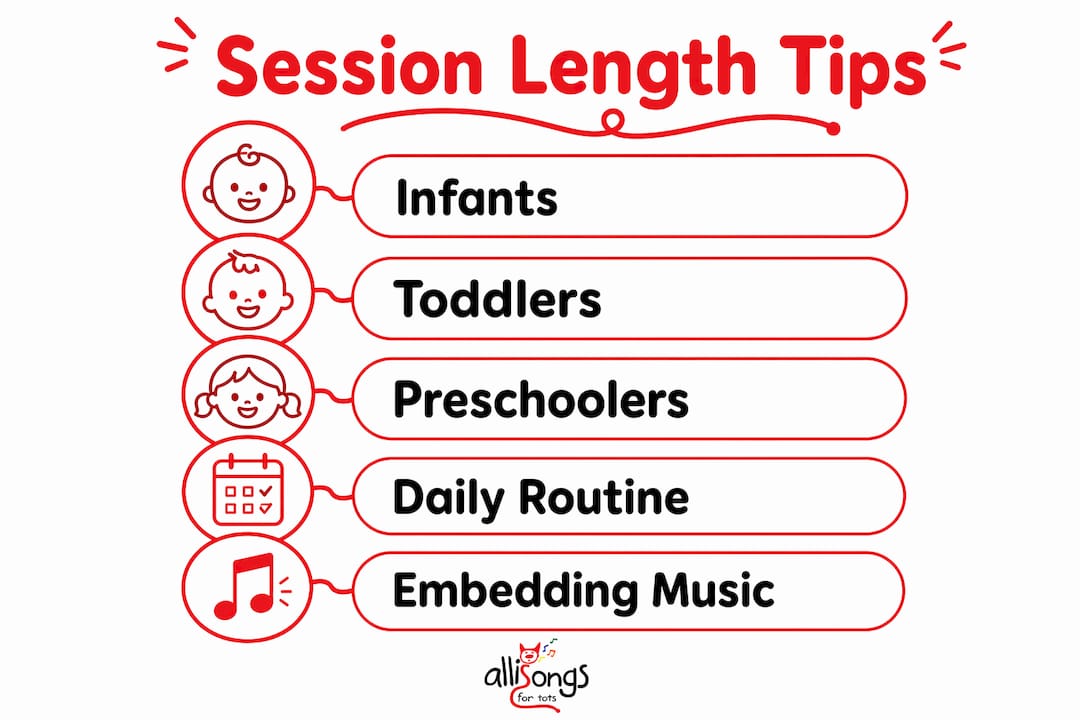
Embedding music into existing routines removes the pressure of carving out extra time. A greeting song in the morning and a goodbye song at pickup are enough to establish a meaningful musical anchor for the day.
What are simple and effective family music activities?
The best family music activities require no instruments and no musical background. Your voice, your body, and a few household items are all you need to create a rich musical environment at home.
Household percussion: Pots, wooden spoons, plastic containers filled with rice, and metal lids all make effective rhythm tools. These items support steady-beat development just as well as store-bought instruments.
Call-and-response clapping: Clap a simple pattern and invite your child to clap it back. Call-and-response patterns build turn-taking, focus, and listening skills in toddlers. Start with two claps and grow from there.
Movement songs: Marching, swaying, spinning, and jumping to music connect rhythm to body awareness. Pairing movement with a family sing-along makes the experience multisensory, which deepens learning.
Mirror play: When your child bangs a pot or shakes a container, mirror their rhythm back to them. This simple act of imitation signals that their musical attempts matter and significantly boosts engagement.
Transition songs: Make up a short song for diaper changes, snack time, or cleanup. Embedding songs in daily routines turns ordinary moments into joyful bonding experiences and gives children predictable musical cues.
Scarves and ribbons: Waving a lightweight scarf to music encourages sustained attention and large motor movement. This works especially well for children aged 6–24 months who are still developing body coordination.
Your enthusiasm matters far more than your pitch. Children respond to eye contact and joy in shared interaction more than singing quality. Singing off-key with a big smile is more effective than a perfect performance delivered without warmth.
Pro Tip: Rotate two or three activities each week rather than introducing something new every day. Familiarity builds confidence and lets children show you what they have learned.

Sensory-rich activities like clapping games and steady-beat movement also support broader development. A parent’s guide to sensory play explains how these activities connect to cognitive and social growth in young children.
How does family music time support children’s development?
Music does not just make children happy. It actively shapes the brain structures responsible for learning, self-control, and social connection.
“Young children learn music mostly through experiential, subconscious interaction rather than formal instruction. Music education should emphasize joy, consistency, and caregiver-child connection over technical skill or complexity.”
— Music for Young Kids: What Really Matters?
The research behind this is specific. A study on different music styles found that Latin music produced superior effects on inhibitory control and working memory in young children, with gains maintained at follow-up. This matters for Florida families, where culturally diverse music is part of daily life. Choosing music from multiple cultural traditions is not just inclusive. It is developmentally advantageous.
| Development area | How music supports it |
|---|---|
| Working memory | Remembering lyrics, patterns, and sequences strengthens memory systems. |
| Inhibitory control | Waiting for a cue in call-and-response builds self-regulation. |
| Turn-taking | Musical conversations teach children to listen before responding. |
| Emotional regulation | Familiar songs provide comfort and predictability during transitions. |
| Confidence | Repeated participation in musical routines builds a sense of competence. |
Social development through music is especially visible in group settings. Early musical interaction builds the conversational skills children need before they can fully use language. A toddler who learns to wait for their turn in a clapping game is practicing the same skill they will use in classroom discussions years later.
How can families add musical moments to everyday life?
The most effective approach to kids music time is not a scheduled class. It is music woven into the fabric of your day. Small, consistent moments add up to significant developmental gains over time.
Use greeting and goodbye songs as anchors. A consistent “hello” song at the start of the day and a “goodbye” song at pickup or bedtime give children recognizable musical cues that signal transitions and reduce anxiety.
Sing through care routines. Bath time, diaper changes, and mealtime are natural opportunities for songs. Making up simple lyrics about what you are doing keeps children engaged and turns routine care into connection.
Follow your child’s lead. When your child hums, taps, or sways, join in. Matching their rhythm and energy shows them that their musical instincts are worth celebrating. This is one of the most powerful things you can do during a family jam session at home.
Involve the whole family. Older siblings, grandparents, and even remote relatives on a video call can participate in a family sing-along. Group singing builds a sense of belonging and gives children multiple models for musical engagement.
Keep it low-pressure. Some days will be a full 20-minute family music night with dancing and instruments. Other days will be one song during the car ride. Both count. Consistency over perfection is the standard that produces results.
For parents who want specific strategies organized by age and routine, tips for busy parents offer a practical starting point for embedding music without adding stress to your day.
Key Takeaways
Consistent, caregiver-led family music time builds executive function, emotional regulation, and social skills in children from birth through age five, and it requires no musical training or special equipment to be effective.
| Point | Details |
|---|---|
| Session length by age | Use 5–10 minutes for infants, 20–30 minutes for toddlers aged 18 months and older. |
| Consistency beats duration | Daily short musical moments produce stronger developmental gains than occasional long sessions. |
| No instruments required | Household items like pots, wooden spoons, and rice shakers support rhythm development effectively. |
| Caregiver enthusiasm matters most | Eye contact and joy during shared music engagement drive children’s participation more than singing skill. |
| Cultural variety adds value | Exposing children to diverse musical styles, including Latin music, strengthens inhibitory control and memory. |
What 15 years of family music sessions taught me
After working with Tampa families for over 15 years at Allisongs for Tots, the pattern I see most often surprises new parents. The families who see the biggest growth in their children are not the ones who practice the most perfectly. They are the ones who show up consistently and stay present during the activity.
Parents often come to me worried that they cannot carry a tune or that they do not know enough songs. I tell them the same thing every time: your child does not care if you are in key. They care if you are looking at them, smiling, and engaged. That eye contact and shared joy is the actual mechanism behind the developmental gains research documents.
The other thing I have learned is that less is more when it comes to variety. Parents tend to want to introduce new songs and activities constantly. But children aged 12–18 months in particular need repetition. Singing the same three songs every day for a month builds more confidence and anticipation than cycling through 30 different songs in a week.
My honest advice: pick two or three songs your family loves, use them as daily anchors, and let your child show you when they are ready for more. The musical milestones your child reaches through this simple practice will surprise you.
— Allisongs for Tots
Music classes in Tampa that grow with your child
Allisongs for Tots offers music classes for infants and preschoolers in Tampa, designed for children from birth through age five. Every session is built around caregiver participation, research-based activities, and culturally diverse music, including original songs by director Allison Wilkins.
Classes give your child structured musical engagement with the added benefit of professional guidance and a nurturing group environment. Parents leave each session with new songs and activities to continue the learning at home. If you are ready to give your child a strong developmental foundation through music, Allisongs for Tots is the place to start.
FAQ
What is the best age to start family music time?
Family music time is beneficial from birth. Even newborns respond to a caregiver’s voice and simple rhythmic patterns, making early musical engagement appropriate at any age.
How long should a music session be for a toddler?
Sessions of 20–30 minutes work best for children aged 18 months to 3 years. Younger infants benefit more from shorter, repeated bursts of 5–10 minutes throughout the day.
Do I need instruments or musical training to do this at home?
No instruments or training are required. Household items like pots, wooden spoons, and rice-filled containers support rhythm development, and a caregiver’s enthusiastic voice is the most effective tool available.
What type of music is best for young children’s development?
Culturally diverse music, including Latin rhythms, produces strong gains in inhibitory control and working memory. Familiar, repetitive songs also build confidence and internal timing in children aged 12–18 months.
How does music time support my child’s social skills?
Musical activities like call-and-response clapping teach turn-taking and listening, which are the same conversational skills children use in social and academic settings as they grow.
