


Call and response songs are defined as an interactive musical structure where a leader sings a phrase and a group replies with a set response, creating a back-and-forth vocal dialogue. This format is rooted in West African communal rituals, American work songs, and gospel music, making it one of the oldest and most effective tools for building community through sound. For parents and educators in Florida, these songs offer a practical, joyful way to build language skills, social confidence, and active listening in children from infancy through preschool. Allisongs for Tots has used this format for over 15 years in Tampa to support children’s development through music.
1. Top 10 call and response songs for young children
These ten songs are well-loved, accessible, and structured to draw even the shyest child into participation.
- “Who Built the Ark?” This traditional African American spiritual uses call and response to teach storytelling, vocabulary, and past tense verbs. The leader asks, “Who built the ark?” and children reply, “Noah, Noah!” Playful animal verses keep toddlers engaged and laughing.
- “Boom Chicka Boom” A camp classic where the leader sings a line and children repeat it exactly. Each round adds a new vocal style, such as “underwater voice” or “opera voice,” which builds articulation and listening skills.
- “Sing After Me” Made famous by Sesame Street, this repeat-after-me song uses tongue twisters and vocal challenges to improve children’s articulation. It frames participation as a fun challenge, which reduces performance anxiety.
- “Miss Mary Mack” A hand-clapping song with a clear call and response structure. Children learn to anticipate the response phrase, which builds memory and rhythm simultaneously.
- “Down by the Bay” The leader sings a rhyming question and children complete the silly rhyme. This format builds phonological awareness and creative thinking.
- “Head, Shoulders, Knees and Toes” A movement-based repeat-after-me song that pairs body awareness with vocabulary. Speeding up the tempo adds a playful challenge that keeps children focused.
- “If You’re Happy and You Know It” The leader calls out an emotion and action, and children respond by performing it. This song builds emotional vocabulary and body coordination at the same time.
- “John Jacob Jingleheimer Schmidt” A repetition song where children respond by singing the chorus louder or softer on cue. It teaches dynamic listening and group synchronization.
- “Willoughby Wallaby Woo” A name-substitution song where the leader calls a child’s name in a silly rhyme and the group responds. Personal inclusion makes every child feel seen and celebrated.
- “We Will Rock You” (adapted for kids) The stomp-stomp-clap pattern is a natural call and response structure. Educators adapt the verses to classroom themes, making it flexible for any learning unit.
2. How call and response songs support early language and social skills
Call and response music teaches the mechanics of conversation before children can read or write. Turn-taking in song mirrors the back-and-forth of real dialogue, giving children a low-pressure space to practice listening and responding. This is the same skill that underlies every future conversation, classroom discussion, and friendship.
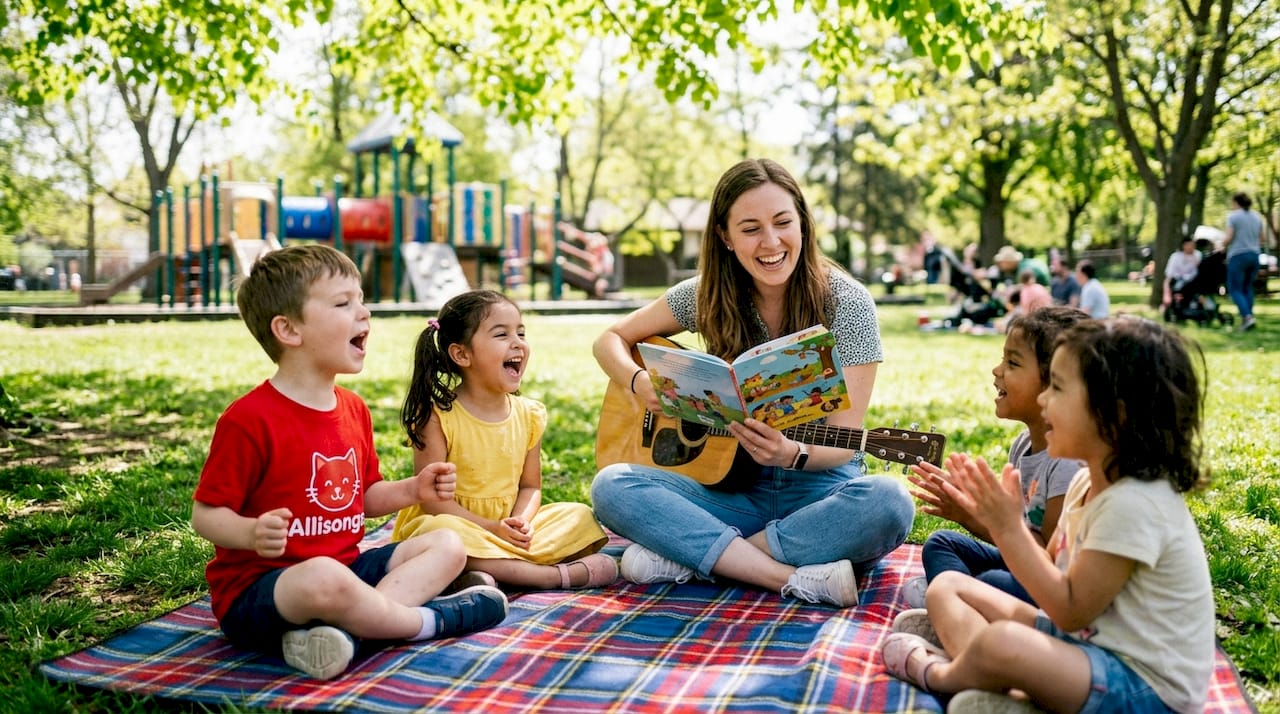
The social benefits are equally strong. When a child hears their response echo back through a group, they experience belonging and shared purpose. Synchronizing voices builds emotional ties that go beyond performance. Children who participate regularly in group singing show stronger cooperation and active listening in other settings too.
Vocabulary grows naturally through repetition. Songs like “Who Built the Ark?” introduce past tense verbs and animal names in a memorable, rhythmic context. Children absorb new words through song far more readily than through direct instruction alone.
Pro Tip: When you introduce a new call and response song, sing the response part yourself first so children hear exactly what to echo. This removes uncertainty and gets even hesitant children joining in within a few rounds.
Articulation also improves through songs that include tongue twisters and unusual sound combinations. “Sing After Me” is a strong example because it layers vocal challenges progressively, building confidence with each successful repetition.
3. Adding movement and rhythm to boost engagement
A steady 4/4 time signature makes most call and response songs easy to pair with physical movement. Children under five respond naturally to a predictable beat, and adding clapping or stomping gives their bodies a way to participate alongside their voices.
Combining movement with music strengthens motor skills and musical engagement at the same time. This dual benefit is especially valuable for toddlers, whose physical and cognitive development are deeply connected. A child who claps on the beat while singing is building coordination, timing, and auditory processing all at once.
Here are practical ways to add movement to your sessions:
- Clapping on the beat during the “call” phrase and freezing during the “response” teaches children to distinguish between listening and participating.
- Stomping or marching to songs like “We Will Rock You” (adapted) gives high-energy children a physical outlet that keeps them focused.
- Hand gestures tied to lyrics in songs like “Head, Shoulders, Knees and Toes” reinforce vocabulary through body memory.
- Circle formations during group singing build spatial awareness and help children track whose turn it is to lead.
- Instrument play such as shakers or tambourines during the response phrase adds a sensory layer that deepens engagement.
Pro Tip: Start with a slow tempo and let children set the pace. Once they feel confident with the words and movement together, gradually increase the speed. This approach builds mastery before adding challenge, which keeps frustration low and participation high.
For Tampa families attending music classes for infants and toddlers, movement-based call and response activities are a regular part of the Allisongsfortots curriculum. The combination of rhythm and motion gives children a full-body musical experience.
4. Creative ways for parents and educators to lead these songs
Strong leadership makes the difference between a song that lasts two minutes and one that holds a group’s attention for twenty. The structure of call and response gives leaders a natural advantage: the response is predictable, so the leader is free to improvise the call.
- Improvise the call phrase. Because children know their response, you can change the call each round to introduce new vocabulary, themes, or silly ideas. Improvising calls keeps sessions dynamic and prevents boredom, even with familiar songs.
- Pause and wait. Rushing the call is the most common mistake leaders make. Slowing down and waiting for children’s responses builds true conversational dynamics and gives every child time to process and participate.
- Invite children to lead. Once children know a song well, hand the call to a child and let the group respond to them. This shift builds confidence and gives children a sense of ownership over the activity.
- Create custom verses. Substitute children’s names, classroom objects, or current themes into existing song structures. Personalized content holds attention longer and makes children feel directly included.
- Validate every response. Nod, smile, or echo back what children sing. Positive reinforcement signals that their participation matters, which increases willingness to try again.
- Layer complexity gradually. Start with a single-line call and a one-word response. As children grow comfortable, extend the call phrase or add a second response layer to stretch their listening and memory.
Parents at home can apply these same strategies during bath time, car rides, or outdoor play. The language and literacy benefits of musical interaction are not limited to a classroom setting.
Key takeaways
Call and response songs are one of the most effective musical tools for building language, social skills, and motor development in children from birth through age five.
| Point | Details |
|---|---|
| Define the structure clearly | Call and response songs use a leader-and-group format rooted in West African and gospel traditions. |
| Language development is direct | Turn-taking in song teaches dialogue mechanics, vocabulary, and articulation in a low-pressure setting. |
| Movement multiplies the benefit | Pairing songs with clapping or stomping builds motor skills and musical engagement simultaneously. |
| Leadership technique matters | Waiting for children’s responses and improvising calls keeps sessions engaging and builds true participation. |
| Personalization increases impact | Custom verses and name inclusion make children feel seen, which raises confidence and attention. |
Why I believe call and response is the most underused tool in early childhood music
After more than 15 years of working with infants and preschoolers in Tampa, I keep coming back to call and response as the format that does the most work with the least friction. Parents often arrive at Allisongs for Tots sessions expecting music to be something they watch their child do. What surprises them is how quickly they become part of the song themselves.
That reciprocal quality is the real power here. Call and response creates social bonds and shared emotional experiences that no passive listening activity can replicate. I have watched children who barely spoke in group settings find their voice through a simple echo song. The format removes the fear of being wrong because there is only one right answer, and everyone sings it together.
What I tell educators is this: do not overthink the song selection. A child does not care whether you choose a gospel spiritual or a silly camp chant. What they care about is whether you pause long enough to hear them respond. That pause is where the learning lives. It is where the child feels counted.
The centuries-old tradition of communal communication that gave us call and response was never about performance. It was about connection. That is exactly what young children need most.
— Allison
Music classes in Tampa that bring these songs to life
Allisongs for Tots offers weekly music classes for children from birth through age five at its Tampa location, and call and response music is woven into every session. Each class is designed around research-based activities that support language development, motor skills, and social-emotional growth through direct caregiver participation.
Director Allison Wilkins combines culturally diverse traditional songs with original compositions to give children a rich, varied musical experience. Parents and caregivers participate alongside their children, which reinforces the reciprocal interaction that makes these songs so effective at home too. Group music classes give children the added benefit of singing with peers, which builds social confidence in a way that one-on-one settings cannot replicate. Visit Allisongs for Tots to learn more about class schedules and enrollment for Tampa families.
FAQ
What are call and response songs?
Call and response songs are an interactive musical format where a leader sings a phrase and a group replies with a set response. This structure is rooted in West African communal traditions and American gospel music.
How do repeat-after-me songs help language development?
Repeat-after-me songs teach children turn-taking, articulation, and vocabulary through structured vocal exchange. Songs like “Sing After Me” use tongue twisters and progressive challenges to build speaking confidence.
What age is best for starting call and response music?
Children can engage with call and response music from infancy, responding to vocal patterns before they can speak full words. Allisongsfortots offers classes for children from birth through age five in Tampa.
How do I teach call and response songs at home?
Start with a simple one-line call and a short response, sing the response yourself first so children know what to echo, and always pause long enough for children to reply. Consistency and repetition across daily routines build familiarity quickly.
Is call and response used in worship settings?
Call and response in worship is one of its oldest applications, present in gospel, spiritual, and liturgical traditions across many cultures. The same vocal exchange structure that builds community in worship also builds social bonds and listening skills in young children.
Recommended
- Incorporating Music into Your Child’s Daily Routine: Easy Tips for Busy Parents
- Using Music to Help Toddlers Manage Emotions and Transitions: A Parent’s Guide
- The Role of Parents in Tampa Infant Music Classes: Support Your Child’s Musical Journey – Allisong for Tots
- In the Forest Song for Kids | Animal-Themed Educational Video | Fun Kids Sing-Along with Ms. Alli & Mr. Todd
